
```html
```
Dummy Cameras for the Car
A dummy camera placed visibly in or around your vehicle can discourage opportunistic theft and break-ins without any wiring, monitoring fees, or complex installation. These are battery- or solar-powered decoys designed to look like real surveillance equipment. They work best as part of a layered approach — paired with good parking habits and visible placement in higher-risk areas.
Is a Dummy Camera Actually Worth Placing Near Your Car?
Most vehicle break-ins are opportunistic. Someone scans a parking lot, looks for an easy target, and moves on if anything suggests they might be watched. That's the logic behind using a visible decoy camera near your car — not to catch anyone, but to make your vehicle look like the less attractive option.
If you park in a driveway, a residential garage area, an apartment lot, or any space where you don't have existing camera coverage, a well-placed dummy camera can fill that gap at a fraction of the cost of a real system. It's not a guarantee of anything. But for a lot of people, it's a reasonable, low-effort layer of deterrence that costs less than a single deductible.
Top Dummy Cameras for Vehicle Deterrence
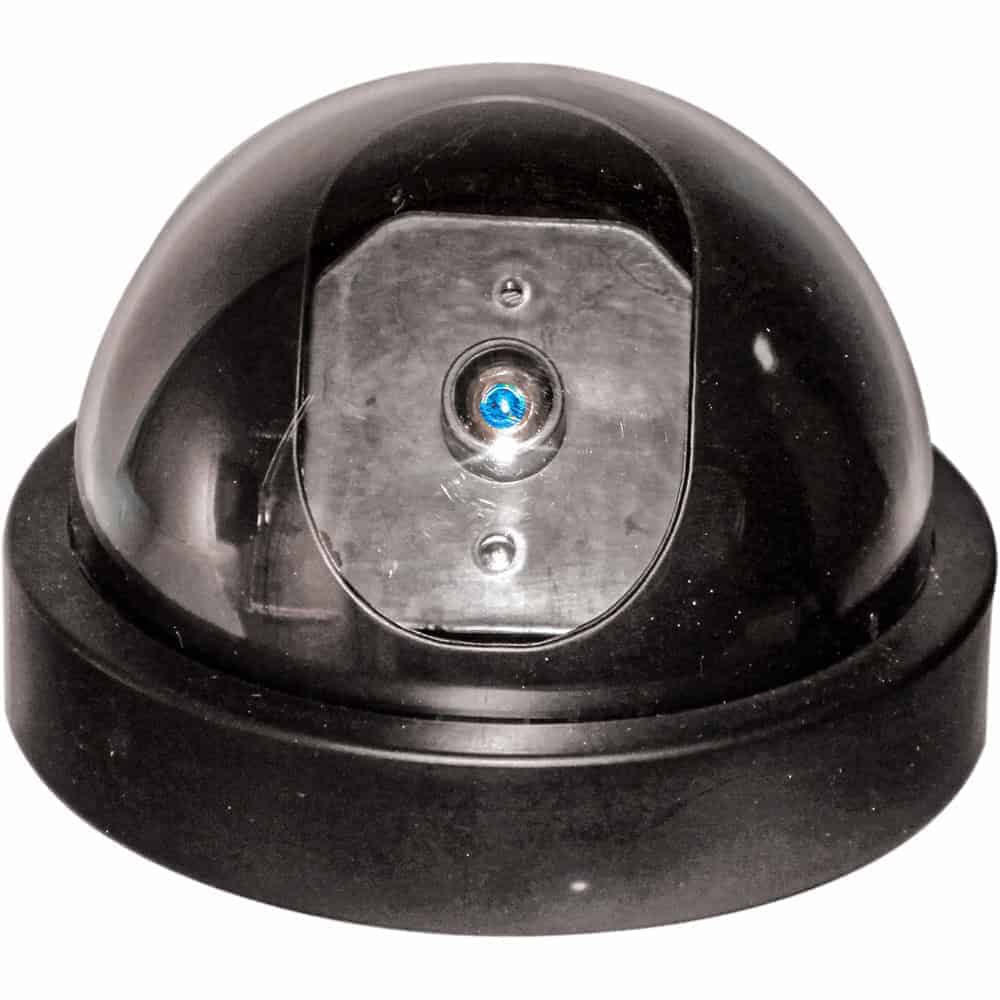
Dummy Dome Security Camera with Flashing LED – Black
Price: $5.99
A straightforward, low-cost decoy that mounts cleanly to a wall, post, or overhang near your parking area. The motion-activated flashing red LED is the key visual cue — it mimics active recording behavior that most people associate with real surveillance cameras. If you're looking for something simple to place above a driveway or carport entrance, this is a reasonable starting point.
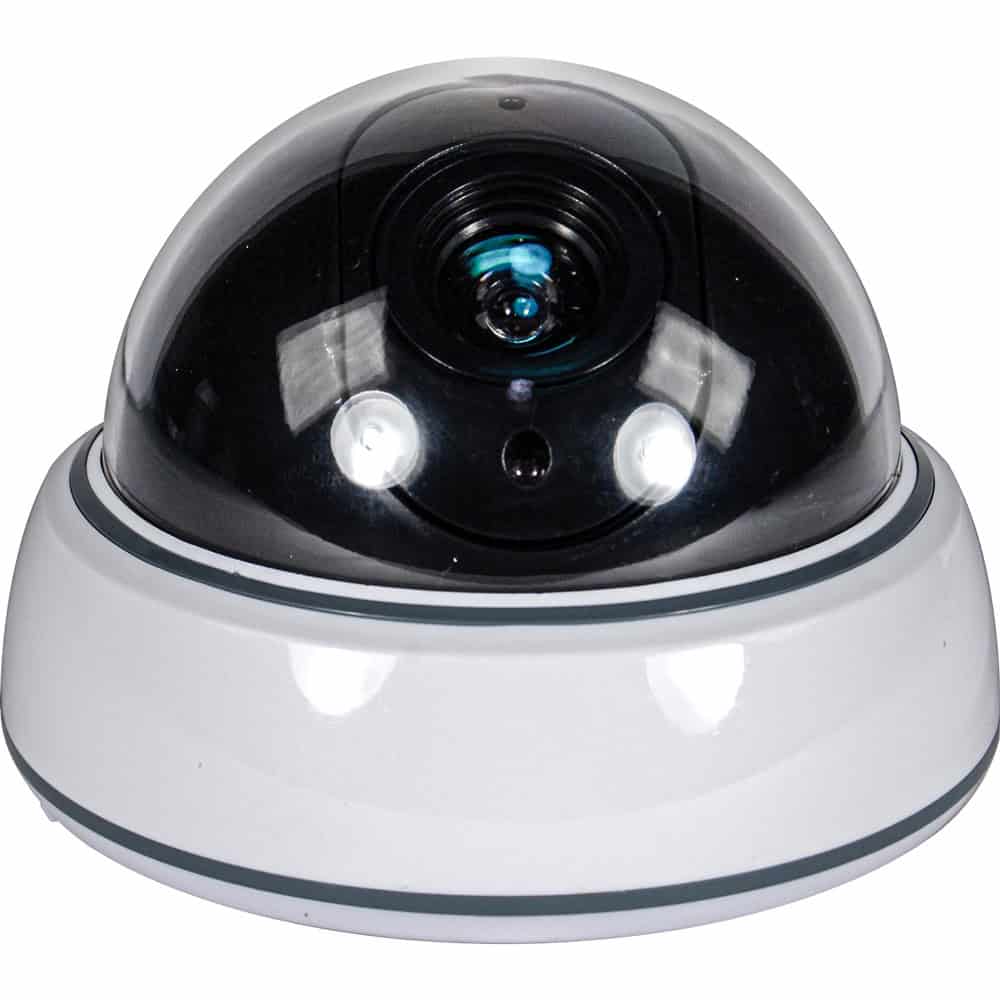
Dummy Dome Security Camera with Flashing LED – White Body
Price: $8.95
Same motion-activated flashing LED design as the black model, but in a white housing that blends naturally with light-colored walls, garage soffits, and residential exteriors. If your parking area has white or neutral trim, this version will look more like it belongs there — which is exactly the point. A camera that looks out of place draws second looks for the wrong reasons.
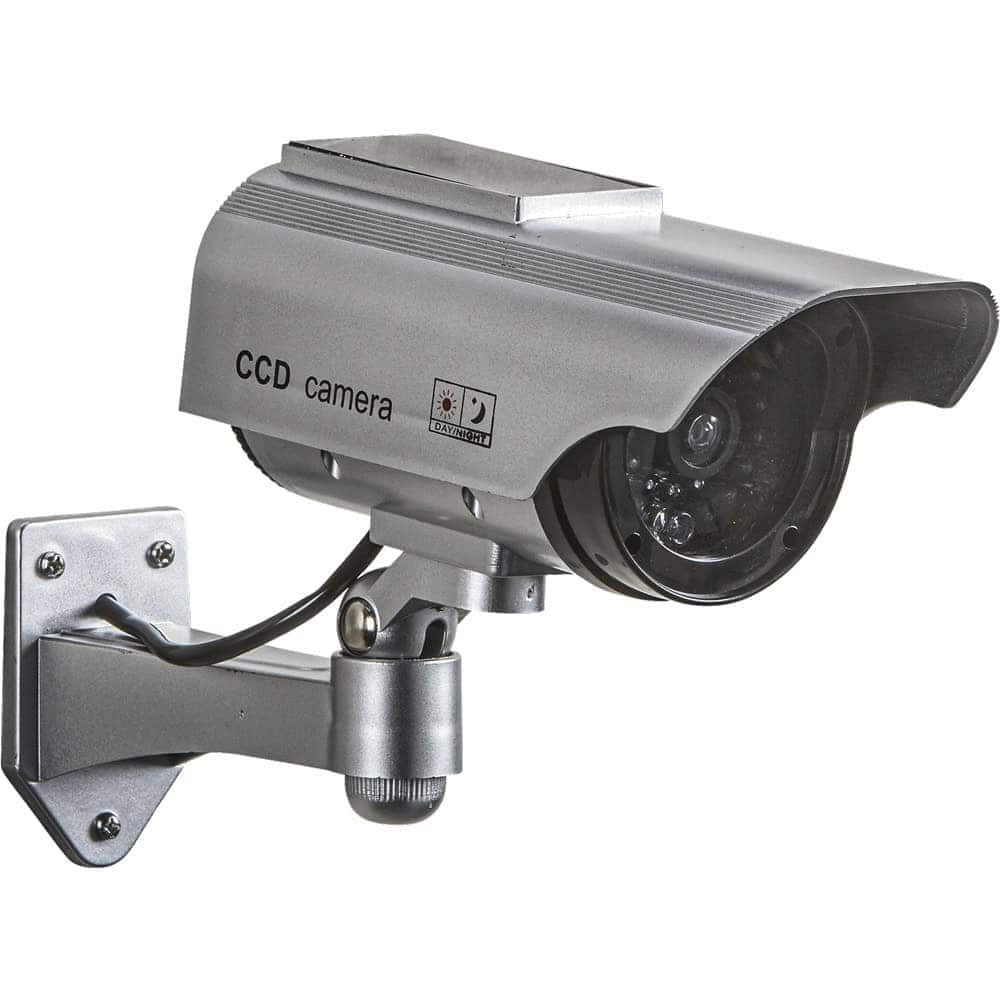
Solar Powered Dummy Security Camera with Flashing Red LED
Price: $13.95
For vehicle areas where running to swap batteries regularly isn't practical, this solar-powered model handles its own power needs as long as it gets some daylight. The IR-style housing adds visual realism — it closely resembles the kind of cameras you'd see on commercial properties and parking structures. Includes a rain shield and a window warning sticker, which is its own form of deterrent for nearby vehicles.
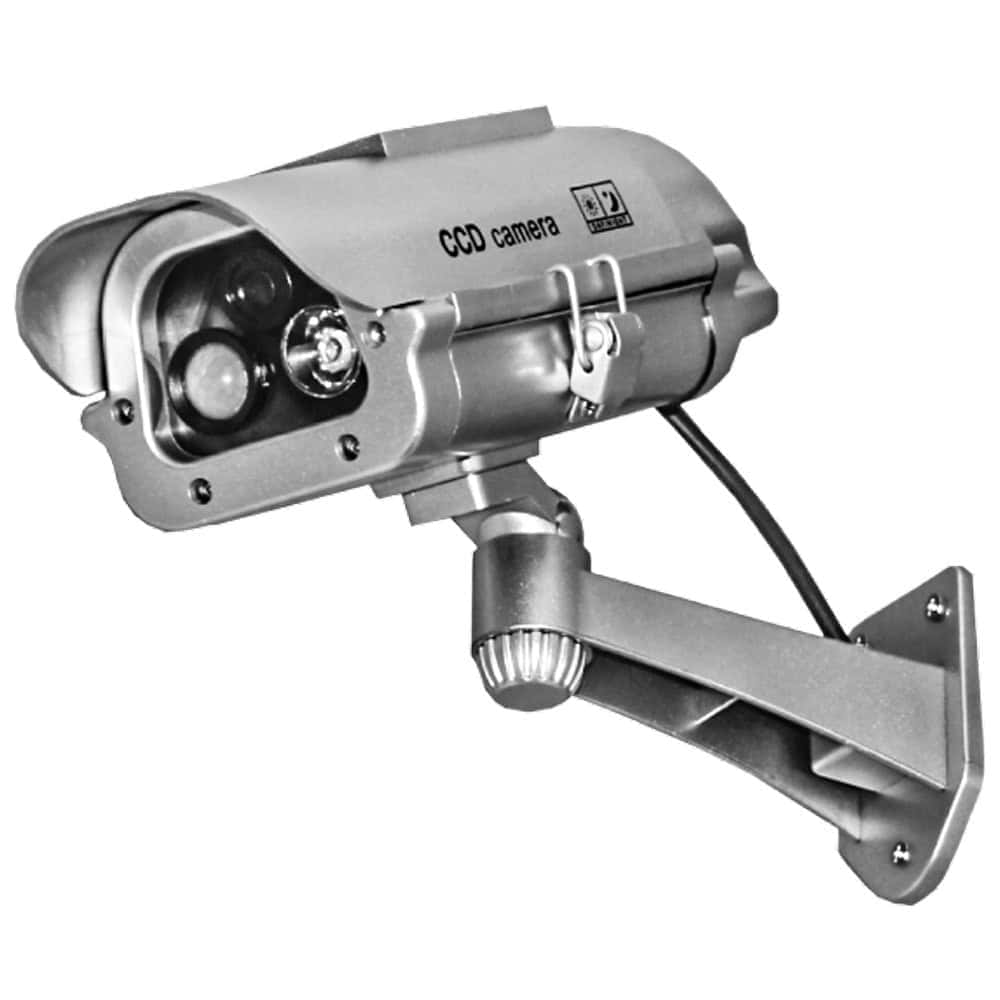
Solar Powered Dummy Camera with Motion-Activated Flashing LED
Price: $21.95
This model combines solar power with motion activation and a 15-foot detection range, so the LED only flashes when something is moving nearby. That behavior is notably more convincing than a camera that blinks constantly regardless of activity. For a driveway, parking pad, or garage entrance where you want the most realistic-looking deterrent with zero ongoing maintenance, this is the option that checks the most boxes.
What to Look for in a Dummy Camera for Your Car or Parking Area
Placement and appearance matter more than most people realize. A dummy camera that looks cheap, hangs at an odd angle, or blinks nonstop in broad daylight can actually signal that it's fake to anyone who's paying attention. The goal is to blend in with what real surveillance equipment looks like in a given environment — dome-style housings, IR-style lenses, subtle LED activity, and a mounting position that makes logical sense for a camera covering that area.
Power source is a practical consideration, especially outdoors. Battery-operated models are easy to place anywhere but require periodic maintenance. Solar-powered models solve that problem if the mounting location gets enough light. For a vehicle-adjacent setup — a driveway wall, garage eave, or exterior post — solar tends to be the more hands-off choice over time.
Motion-activated LEDs are worth the small additional cost over always-on blinking lights. Real cameras don't flash randomly — they respond to activity. A motion-triggered indicator is a more convincing visual cue, and it also extends battery or solar charge life. If the main goal is deterrence near your vehicle, that behavioral realism is what makes a decoy worth using. Browse the full dummy camera collection to compare all available options.
Frequently Asked Questions
Can a dummy camera actually deter car break-ins?
It can contribute to deterrence, especially against opportunistic theft. Most vehicle break-ins involve someone quickly scanning a parking area for easy targets. A visible camera — even a decoy — adds a perceived risk that can make your car a less attractive option than one nearby with no visible coverage. It's not a guarantee, but it's a low-cost layer that doesn't require any ongoing effort.
Where is the best place to mount a dummy camera near a vehicle?
Position it where a real camera would logically be installed — above a driveway entrance, on a garage eave, or on an exterior wall with a clear sightline to where the vehicle is parked. Avoid placing it so low that it's obviously out of range, or at an angle that doesn't cover anything. Height between 7 and 10 feet is typical for real surveillance equipment and will look most natural.
Do dummy cameras work at night?
The flashing red LED is actually more visible at night than during the day, which means nighttime deterrence can be stronger. The LED draws attention to the camera's presence in low light. Models with motion-activated LEDs are particularly effective after dark — the light activating when someone approaches more closely mimics how real infrared cameras behave.
Is it legal to use dummy cameras on your property?
In most U.S. jurisdictions, placing fake security cameras on property you own or control is legal. There are no widely applicable federal laws prohibiting their use for deterrence purposes. That said, using dummy cameras in a way that deceives law enforcement or creates a false sense of security in a commercial or rental setting where real surveillance is implied could raise other legal questions. Check local ordinances if you have specific concerns about your situation.
How long do the batteries last in battery-operated dummy cameras?
Battery life varies depending on the model and how frequently the LED activates. On motion-activated models, batteries last significantly longer than on always-on units because the LED only draws power when movement is detected. Typical battery life for motion-activated models ranges from several months to over a year under normal use. Solar-powered models largely eliminate this concern if the mounting location receives adequate daylight.
Ready to Add a Simple Layer of Deterrence Around Your Vehicle?
These cameras are low-cost, easy to install, and don't require any ongoing subscription or monitoring. If you have an uncovered driveway, a parking pad, or a garage area with no existing cameras, one of these decoys is a straightforward way to make that space look less like an easy target. Start with the solar-powered motion-activated model if you want the most realistic behavior, or explore the full dummy camera lineup to find the right fit for your setup.