
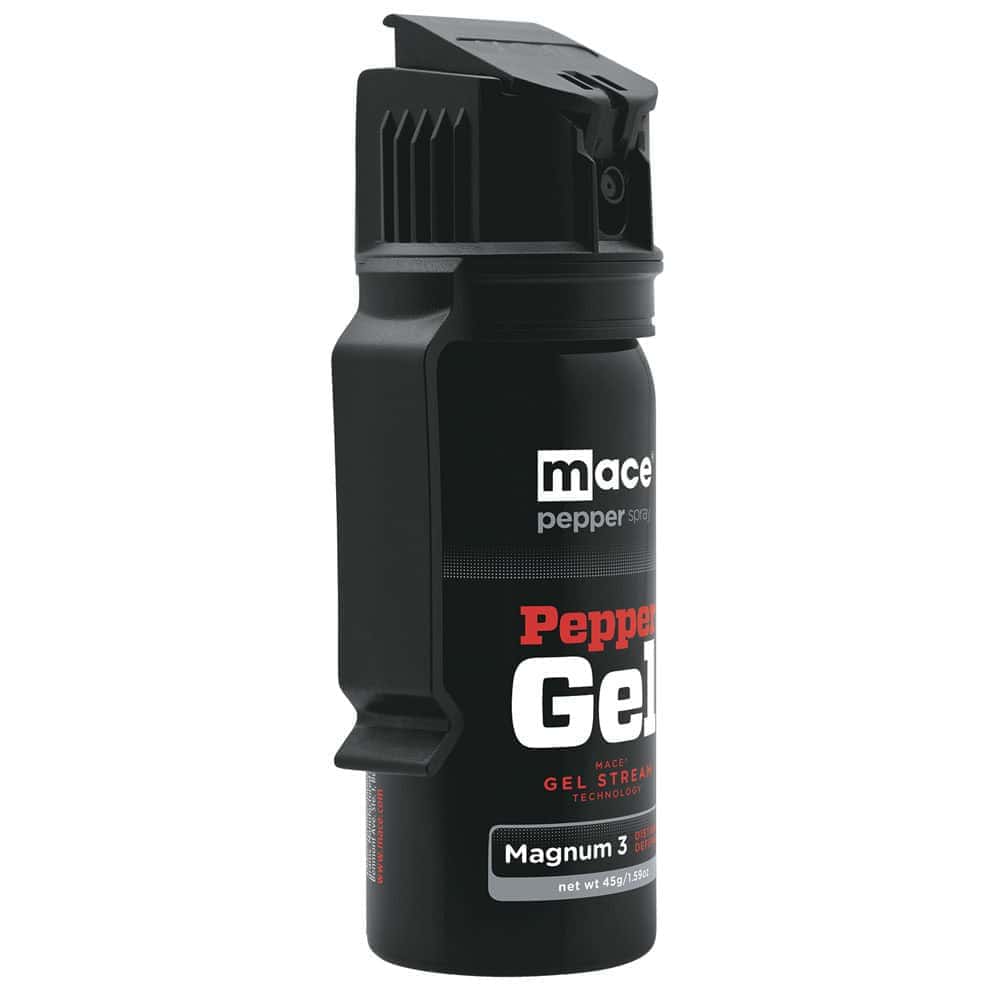
Mace Pepper Gel Magnum 3 – 18-Foot Range, Wind-Resistant
Original price was: $19.94.$16.95Current price is: $16.95.
Buy with Confidence
Covered by a 30-Day Money Back Guarantee. If it's not right for you, returns are easy and hassle-free.

Secure checkout • 100% Satisfaction Guaranteed • 30 Day Money Back Guarantee • Easy Returns • Fast Customer Support
The Mace Pepper Gel Magnum 3 delivers a wind-resistant 10% OC gel stream to 18 feet, making it a practical choice for runners, commuters, and anyone who spends time outdoors where a standard mist spray could drift or blow back.
Most people don’t think about wind until they’re standing outside in it. Standard pepper spray disperses as a fine mist, and in even a moderate crosswind, that mist can drift sideways or back toward the person holding it. The Mace Pepper Gel Magnum 3 was designed with that problem in mind — its thick gel formulation fires as a targeted stream that holds its line in open-air conditions and stays on contact rather than floating through surrounding air.
Who This Pepper Gel Is For
This is a practical choice for people who spend regular time outdoors in variable conditions — runners, hikers, dog walkers, delivery drivers, cyclists, and commuters who move between environments throughout the day. It’s also a considered option for people sharing indoor spaces with family or roommates, where a mist-based spray that lingers in the air is a real concern. The gel stream concentrates its effect on the target rather than dispersing into the surrounding environment.
Is It the Right Fit for You?
Choose It If You Want
- A formulation that holds its trajectory in wind rather than drifting
- Reduced risk of blowback or cross-contamination in shared spaces
- A gel that clings on contact and doesn’t transfer easily
- An 18-foot reach with a flip-top cap that allows quick single-thumb access
Consider Another Option If You Need
- Wide-area dispersal — gel fires as a stream, not a spreading cloud
- The smallest possible footprint for keychain carry
- A format legal in all jurisdictions — check local pepper gel regulations before buying
Mace Pepper Gel Magnum 3 Features and Benefits
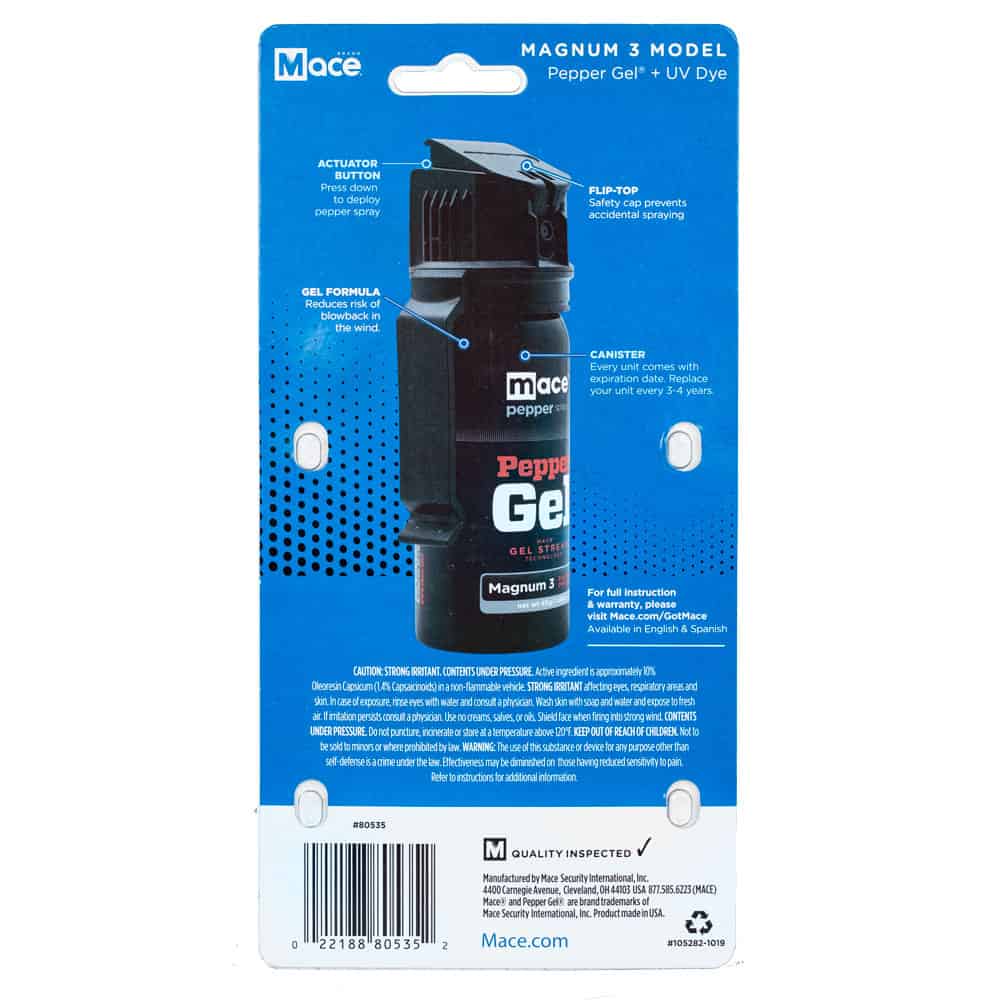
- Wind-Resistant Gel Formula: The thick gel consistency maintains its trajectory in outdoor conditions where a fine mist would scatter or drift.
- 18-Foot Reach: Allows distance between you and a threat before gel contact is made — more room than most compact spray options provide.
- 10% OC Concentration: Oleoresin capsicum at the same active concentration used in standard pepper spray, delivered in a format that stays where it lands.
- Sticks on Contact: Unlike mist or foam, the gel adheres to skin and doesn’t transfer easily to surrounding surfaces or rub off quickly.
- UV Marking Dye: Leaves an invisible marker on skin and clothing that remains detectable under ultraviolet light, useful for post-incident identification.
- Flip-Top Safety Cap: Prevents accidental discharge during carry while allowing single-thumb deployment when needed.
- Belt and Visor Clip Included: Attaches to a waistband, car visor, or bag for accessible carry without a separate holster purchase.
How the Mace Pepper Gel Magnum 3 Compares
Here’s how the gel format stacks up against two common alternatives by type:
| Feature | Mace Pepper Gel Magnum 3 | Standard Mist Spray | Pepper Foam |
|---|---|---|---|
| Wind Resistance | High — thick gel holds trajectory | Low — fine mist drifts in crosswinds | Moderate — heavier than mist, lighter than gel |
| Range | 18 feet | Varies; often 8–12 feet for compact units | Typically shorter range |
| Contact Behavior | Clings to skin, resists transfer | Disperses; may affect surrounding air | Expands on contact, highly visible |
| Area Coverage | Targeted stream | Broader dispersal pattern | Targeted, with expansion |
| Best For | Outdoor use, shared indoor spaces | Wide-area deterrence in still air | Indoor close-range situations |
Charging, Care, and What’s Included
What’s in the Box
Each unit ships with the Mace Pepper Gel Magnum 3 canister, a belt and visor clip, and UV marking dye is integrated into the formula. No additional accessories are required for basic carry.
Care and Storage
Store the canister away from direct heat and sunlight, and keep it out of environments that exceed normal temperature ranges. Test the spray periodically by checking the safety cap and canister pressure. The canister and nozzle carry a one-year manufacturer warranty. Mace recommends replacing the unit within the printed expiration window, as OC formulations lose potency over time.
Legal Notes
Pepper gel is legal to purchase and carry in most U.S. states, but some states, cities, and venues have specific restrictions on formulation type, canister size, or concentration. Check your local laws before purchasing or carrying this product.
Mace Pepper Gel Magnum 3: Frequently Asked Questions
How far does the Mace Pepper Gel Magnum 3 spray?
The Mace Pepper Gel Magnum 3 has an 18-foot range. That’s a meaningful distance for outdoor situations — it puts space between you and a potential threat before any contact occurs. The gel stream is designed to hold that range in open-air conditions without the same drift risk as a mist-based product.
How many bursts does the canister provide?
The canister is rated for approximately 7 one-second bursts. That’s enough for a realistic defensive use and some testing, but it’s worth being deliberate. Avoid unnecessary test sprays in the wind — even gel can drift at close range in strong gusts.
Does the Mace Pepper Gel Magnum 3 work indoors?
It can be used indoors, and the gel format is less likely to contaminate surrounding air than a mist spray. That said, any OC product used in an enclosed space will affect the air to some degree. The gel’s lower airborne dispersal makes it a more manageable option in shared or confined spaces compared to a fine mist.
What does the UV dye actually do?
The UV marking dye integrated into the formula leaves a residue on skin and clothing that’s invisible to the naked eye but detectable under ultraviolet light. It doesn’t affect how the gel performs during use — it’s there to support identification after an incident, and it remains on the skin even if someone attempts to wipe or wash it off quickly.
Add This Pepper Gel to Your Daily Carry
The Mace Pepper Gel Magnum 3 is a straightforward choice for outdoor environments where wind and space are real variables. The belt and visor clip mean it’s ready to go without extra gear. Add it to your cart and check the size options — the 1.59 oz canister fits most carry setups without adding bulk.
| Manufacturer | Mace |
|---|---|
| Type Of Spray | Gel |
| Bursts | 7 one second |
| Range | 18 feet |
| Contains | 1.59 oz |
| Safety | Flip Top |
| Included | Belt / Visor Clip, UV Dye |
| Warranty | 1 Year for Cannister & Nozzle |
Additional information
Related products
- Sale!

Pepper Shot Auto Visor Pepper Spray – 1.2% MC, Stream
Original price was: $9.95.$8.46Current price is: $8.46. Add to cart - Sale!
Mace Canine Repellent – 12-Foot Stream, Keychain Size
Original price was: $17.84.$15.16Current price is: $15.16. Add to cart - Sale!
Pepper Shot Tri-Pack – Home, Vehicle, and Keychain Spray
Original price was: $21.95.$18.66Current price is: $18.66. Add to cart - Sale!
Pepper Shot Halo Holster Pepper Spray – 1.2% MC, 0.5 oz
Price range: $10.20 through $11.05 Select options This product has multiple variants. The options may be chosen on the product page
Reviews
There are no reviews yet.