
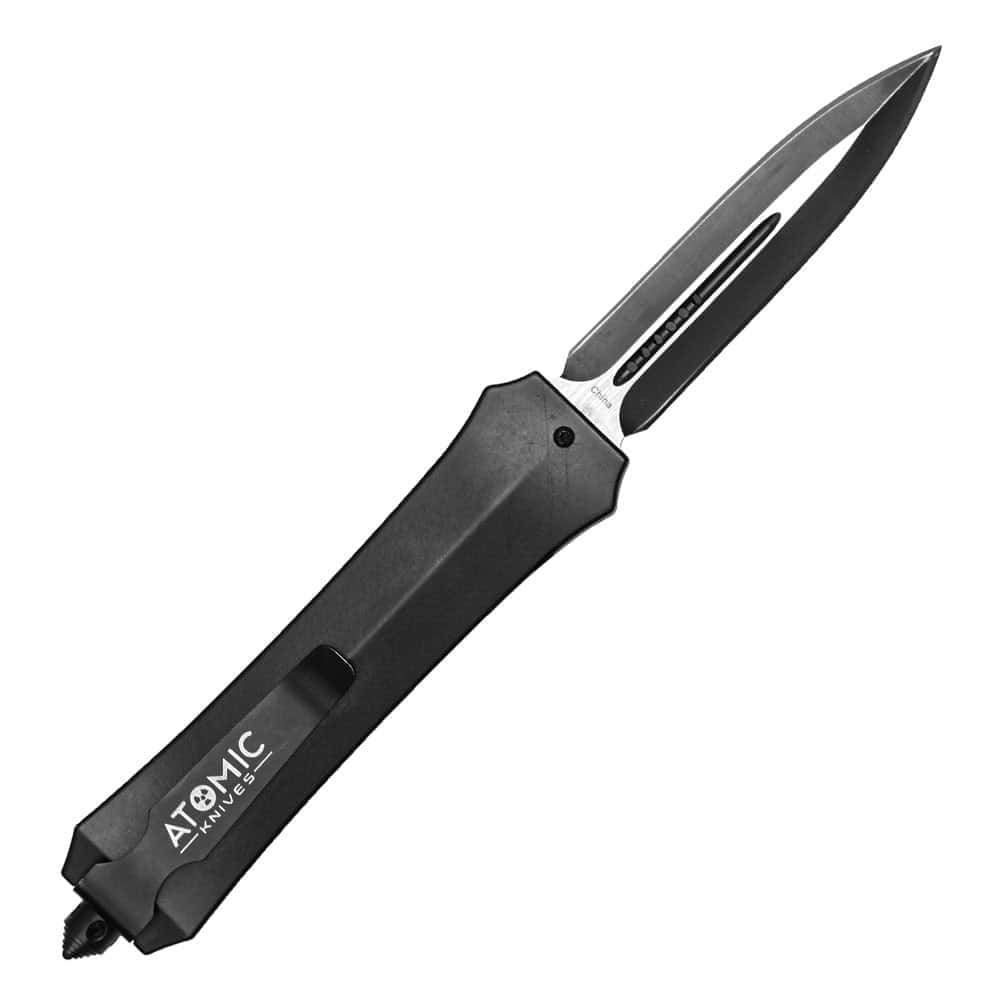
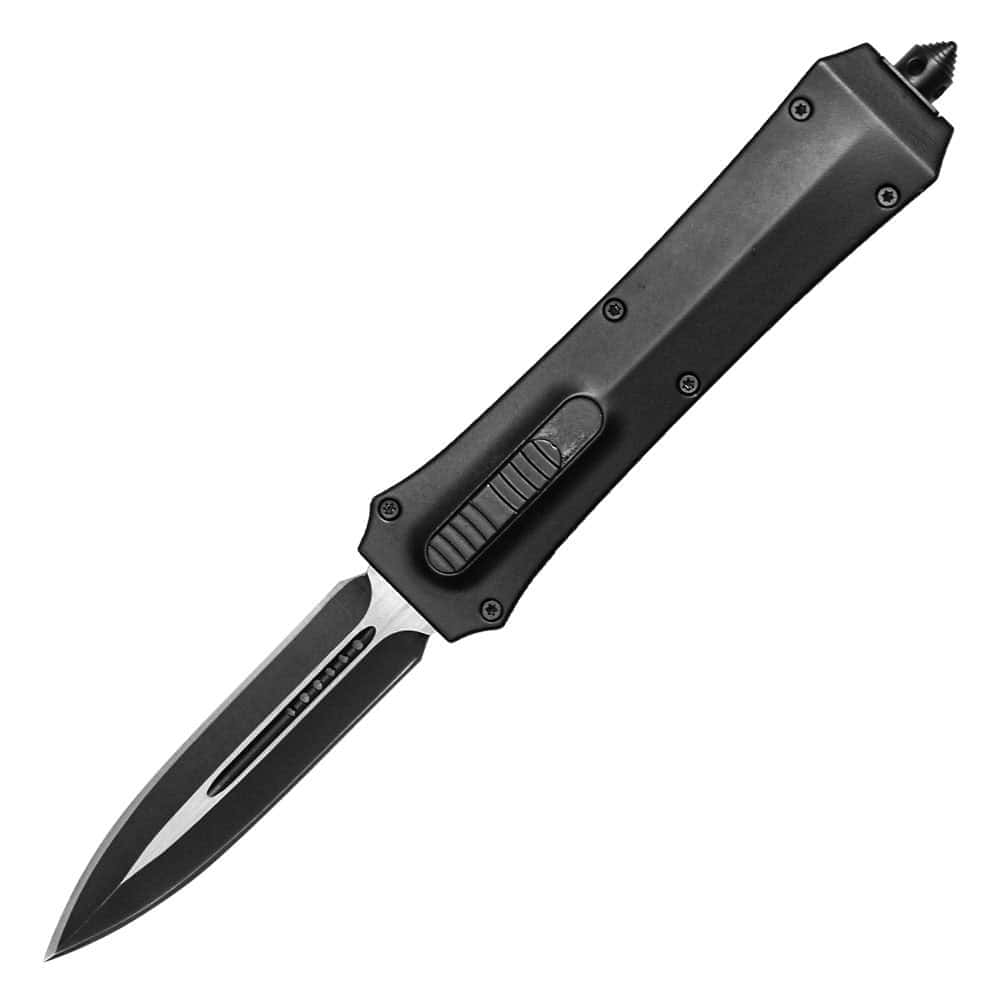
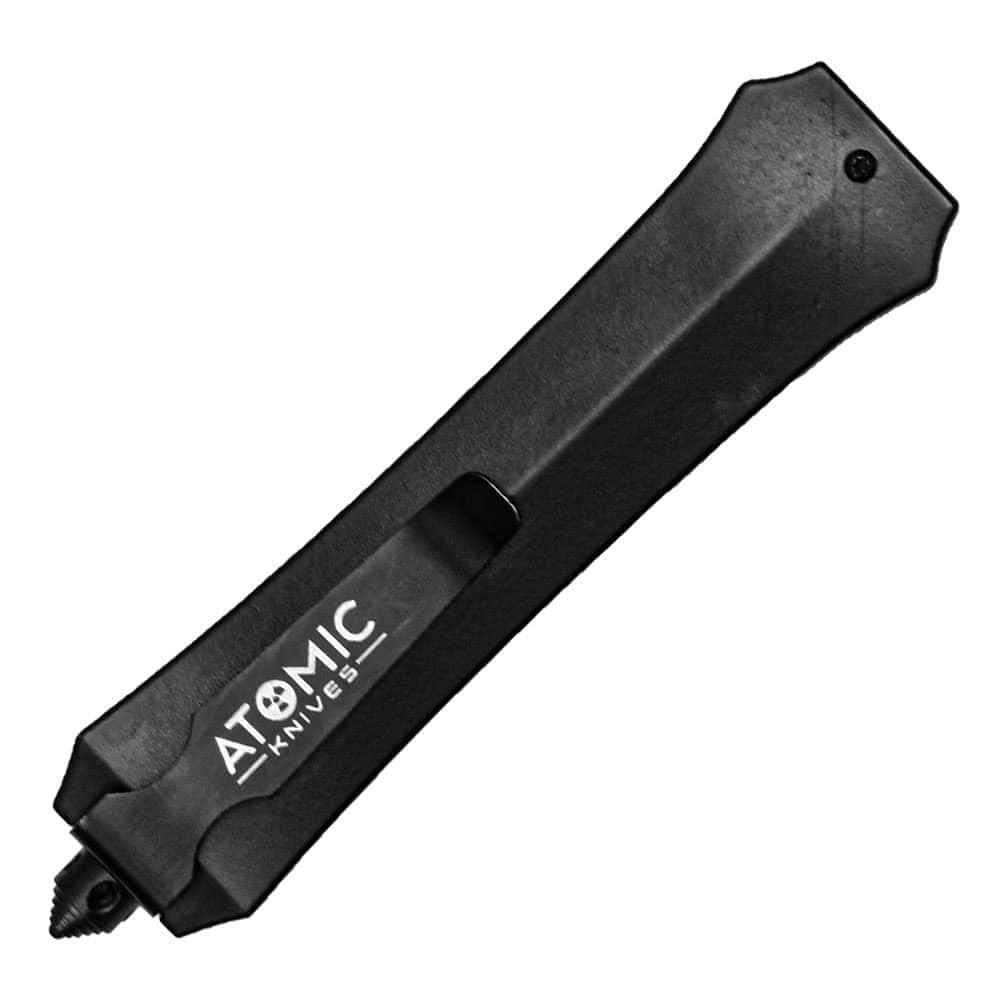
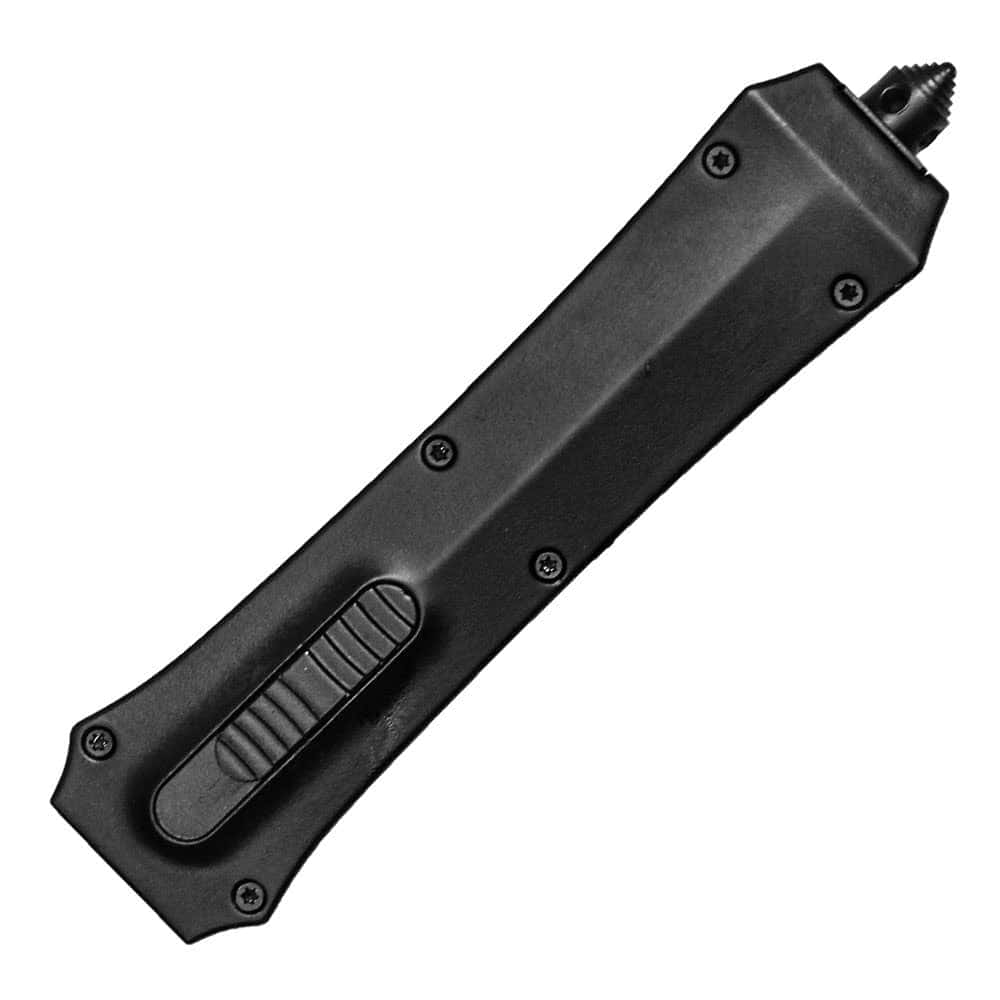
Safety Technology OTF Automatic Knife ST-AK-103 – Double Edge 3.75-Inch Blade, Out The Front Deployment, Premium Steel Construction, 9.5-Inch Overall, 5.75-Inch Collapsed, 0.7 lbs, Black
Original price was: $69.95.$59.46Current price is: $59.46.
Buy with Confidence
Covered by a 30-Day Money Back Guarantee. If it's not right for you, returns are easy and hassle-free.

Secure checkout • 100% Satisfaction Guaranteed • 30 Day Money Back Guarantee • Easy Returns • Fast Customer Support
An OTF — out the front — knife deploys and retracts the blade straight from the top of the handle, not from the side like a traditional folder. This double-edge model opens to 9.5 inches overall with a 3.75-inch blade, built from premium steel with a weight that tells you it’s serious.
- Out The Front deployment — blade extends and retracts from the handle tip
- Double-edge 3.75-inch blade for versatile cutting geometry
- Premium steel construction throughout
- Collapses to 5.75 inches for belt or pocket carry
- 0.7 lbs — substantial feel without excessive bulk
Straight Out, Straight Back
OTF knives operate differently from side-opening folders. The blade travels forward out of the handle and retracts the same way — all in a straight line. That means you can deploy and stow the blade without swinging anything to the side, which matters in tight spaces or when working close to your body.
This model uses a double-edge blade. Both sides cut. That’s an advantage for certain tasks but also means you need to be more deliberate about handling. It’s not the right knife for everyone, and that’s fine.
Who This Knife Is For
People who’ve used OTF knives before and understand the mechanism. Experienced knife users who want a double-edge profile for specific cutting tasks. Anyone working in confined spaces where a side-opening folder is awkward to deploy.
This is not an entry-level knife. The double-edge blade and OTF mechanism require familiarity and respect. If you’re new to automatic knives, a single-edge side-opener might be a better starting point.
Is This the Right Choice for You?
Choose this OTF knife if you want:
- Out-the-front deployment that works in tight or confined spaces
- A double-edge blade for versatile cutting geometry
- Premium steel construction with a substantial 0.7 lb build
Consider something else if you need:
- A single-edge blade for safer general-purpose use
- A lighter knife — this one weighs 0.7 lbs, nearly double most folders
- Something legal in all jurisdictions — OTF knives face restrictions in many areas
The OTF Mechanism
The deployment system uses an internal spring and slider mechanism. Push the slider forward, the blade extends and locks. Pull the slider back, the blade retracts and locks in the closed position. Both actions happen quickly and cleanly. There’s a tactile and audible confirmation when the blade reaches either position.
The premium steel construction applies to both the blade and the internal mechanism. Cheaper OTF knives often fail at the deployment system — the springs weaken, the slider becomes sluggish, or the blade doesn’t lock reliably. This model uses heavier-gauge components throughout, which is part of why it weighs 0.7 lbs. That weight is the mechanism working as designed, not excess material.
Quick Comparison: How Does This OTF Stack Up?
| Feature | OTF Double Edge | OTF Single Edge | Side-Open Auto | Manual Folder |
|---|---|---|---|---|
| Deployment Direction | Forward/back ✓ | Forward/back ✓ | Side swing | Side swing |
| Blade Edges | Double ✓ | Single | Single | Single |
| Blade Length | 3.75 inches ✓ | 3.5 inches | 3.5 inches | 3-4 inches |
| Overall Length | 9.5 inches | 9 inches | 8 inches | 7-8 inches |
| Weight | 0.7 lbs | 0.7 lbs | 0.4 lbs ✓ | 0.2-0.4 lbs ✓ |
| Best For | Experienced users, confined spaces | General OTF use | Daily carry | Universal legality |
Practical Details
Overall length is 9.5 inches open. Collapsed length is 5.75 inches. Blade length is 3.75 inches, double-edged. Weight is 0.7 lbs. Dimensions are approximately 9.5 by 1.38 inches. Black finish throughout. OTF and automatic knives are heavily regulated in many states and municipalities — verify legality in your area before purchasing.
A well-built OTF with a double-edge blade for people who know what they’re looking for. If you understand the mechanism and need the cutting versatility, this delivers.
Why choose a double-edge blade over single-edge?
A double-edge blade cuts on both sides, which allows for different cutting angles and techniques. It’s useful for specific tasks where you need to cut in both push and pull strokes without repositioning. The trade-off is that it requires more careful handling since there’s no flat spine to rest a finger against. Most general-purpose users are better served by a single edge.
How long does the OTF mechanism typically last?
Mechanism longevity depends on build quality and maintenance. Premium steel internals like those in this model generally outlast budget OTF knives by a significant margin. Keep the channel clean, avoid forcing the mechanism if it encounters resistance, and the deployment system should remain reliable through thousands of cycles.
Can I sharpen a double-edge blade myself?
Yes, but it requires more care than a single-edge blade. You need to sharpen both edges evenly and maintain consistent angles on each side. A guided sharpening system helps. If you’re not comfortable sharpening both edges, a professional sharpening service is worth the small cost to maintain proper geometry.
| Type of Knife | Automatic |
|---|---|
| Overall Length | 9.5 inches |
| Blade Length | 3.75 inches |
| Collapsed Length | 5.75 inches |
| Weight | 0.7 lbs |
| Dimensions | 9.5" x 1.38" |
Additional information
Related products
- Sale!

Butterfly Trench Knife with Removable Knuckle Guard – 5-Inch Serrated Blade, 11-Inch Overall, All Stainless Steel Construction, Latch Safety, Available in Black, Plasma, and Stainless Steel
Original price was: $19.95.$16.95Current price is: $16.95. Select options This product has multiple variants. The options may be chosen on the product page - Sale!
Brutus Self-Defense Keychain Bulldog Design – Impact-Resistant ABS Plastic, Pointed Ear Tips, Finger Grip Design, Keyring Included, 2.5 x 3.5 Inches, Available in Pink and Purple
Original price was: $8.25.$7.01Current price is: $7.01. Add to cart - Sale!
Safety Technology Automatic Heavy Duty Knife ST-AK-101 – 3.5-Inch Stainless Steel Blade, 5-Hole Handle Design, Safety Lock Mechanism, 8-Inch Overall Length, 4.5-Inch Collapsed, Black Finish, Belt Carry Ready
Original price was: $18.95.$16.11Current price is: $16.11. Add to cart - Sale!
Safety Technology Automatic Heavy Duty Knife ST-AK-102 – 3.5-Inch Stainless Steel Blade, Solid Handle Design, Safety Lock Mechanism, 8-Inch Overall Length, 4.5-Inch Collapsed, Black Finish
Original price was: $18.95.$16.11Current price is: $16.11. Add to cart
Reviews
There are no reviews yet.