

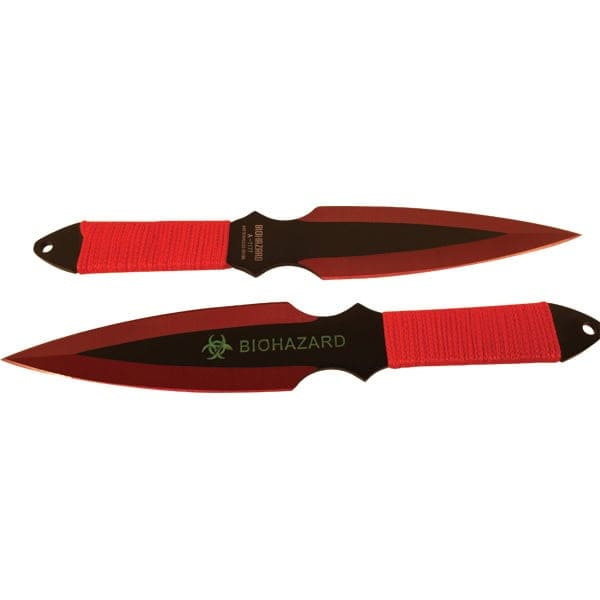
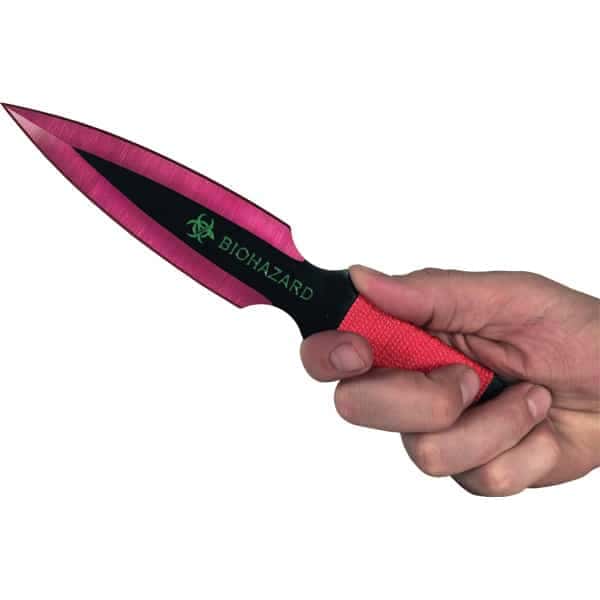
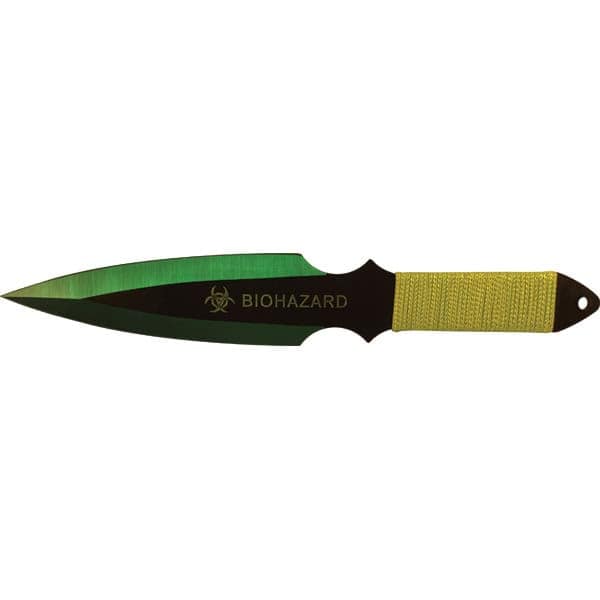
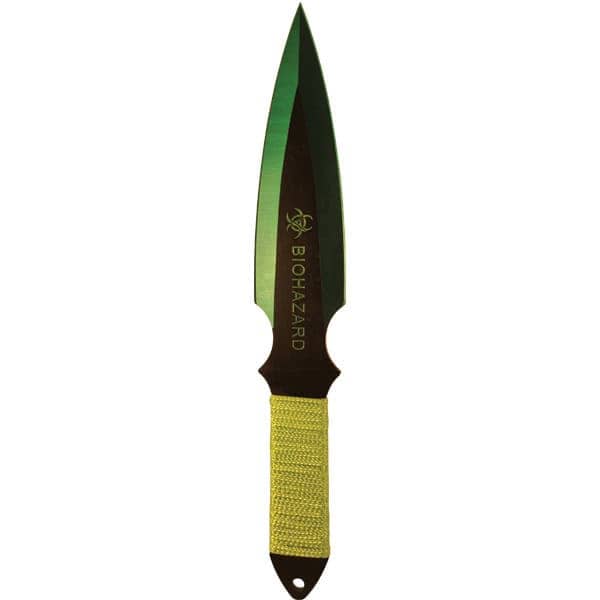
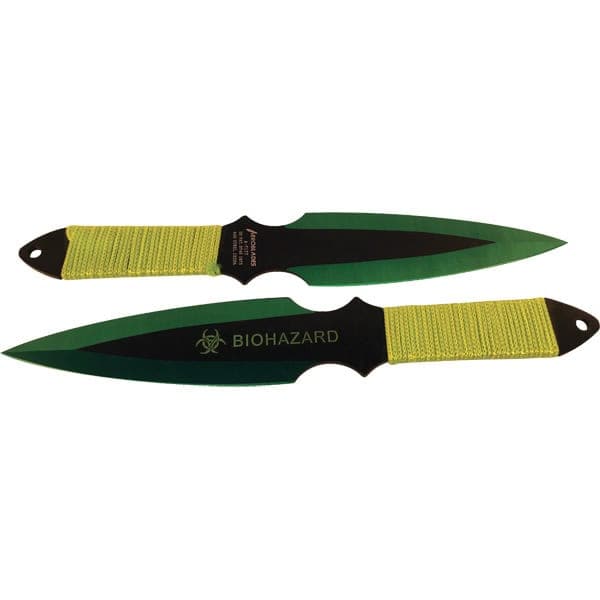
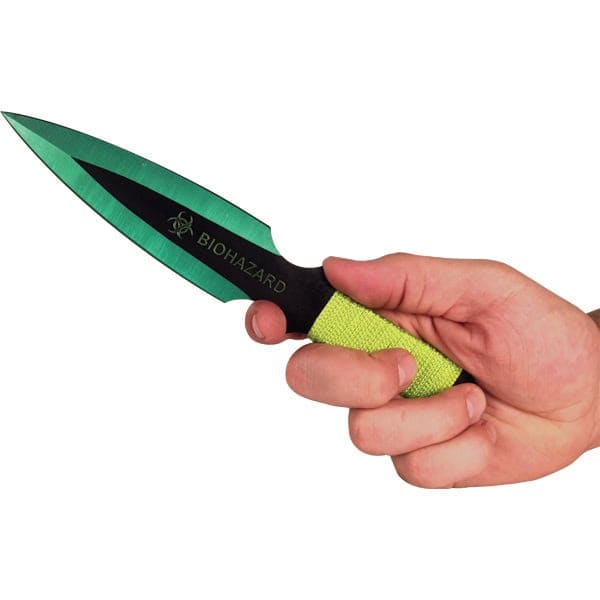
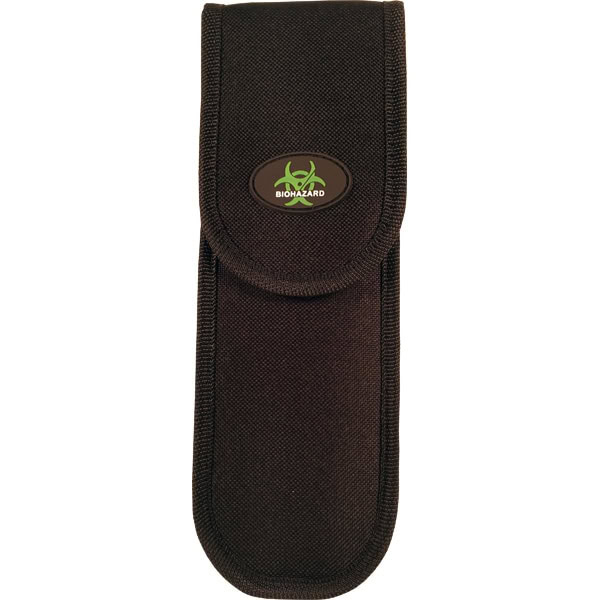
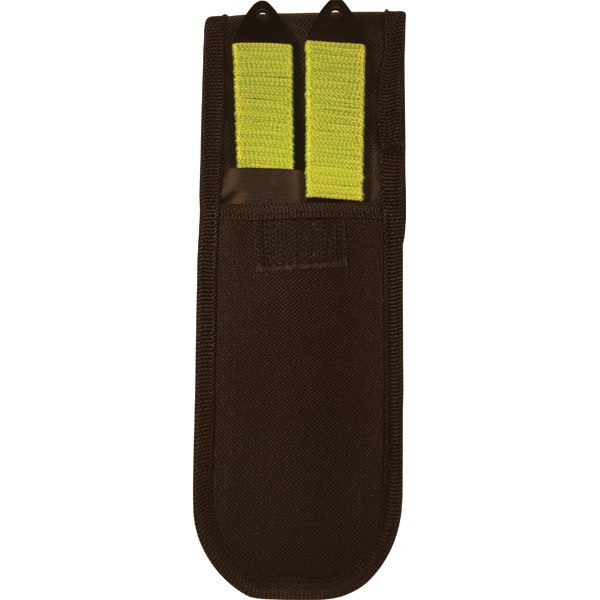
BioHazard 2-Piece Throwing Knife Set, 9-Inch Length – 440 Stainless Steel, Balanced Full-Tang Construction, Nylon Sheath Included, Beginner to Intermediate Skill Level, Available in Red and Green
$15.95
Buy with Confidence
Covered by a 30-Day Money Back Guarantee. If it's not right for you, returns are easy and hassle-free.

Secure checkout • 100% Satisfaction Guaranteed • 30 Day Money Back Guarantee • Easy Returns • Fast Customer Support
Throwing knives are a skill-based hobby, and getting started doesn’t require expensive equipment. This 2-piece set is built for the beginner to intermediate thrower who wants consistent, balanced knives at a reasonable entry point — not a collector’s display piece.
- 2-piece matched set for consistent practice rotation
- 440 stainless steel construction holds up to repeated target impacts
- 9-inch overall length sits in the practical range for learning technique
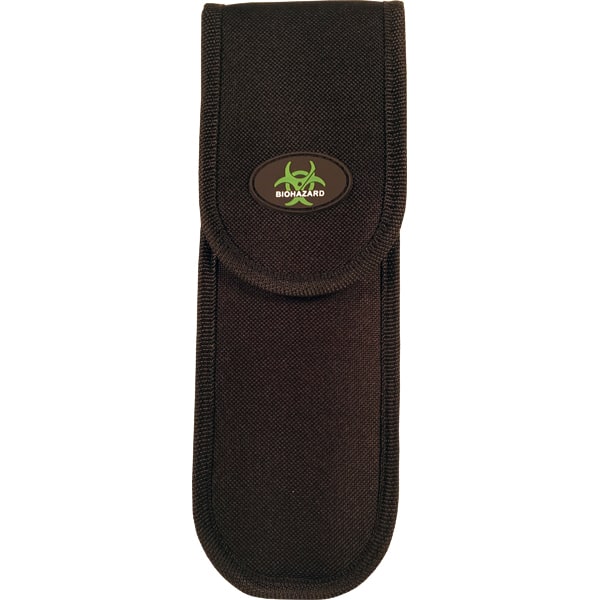
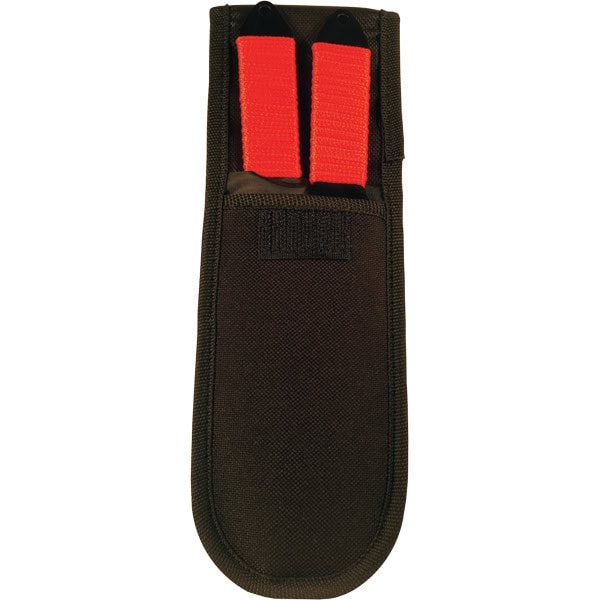
- Nylon sheath pouch included for safe storage and transport
- Available in two colors: Red and Green with BioHazard design
A Straightforward Entry Point for Throwing Practice
Most people who get into knife throwing start with whatever they have on hand — a kitchen knife, a pocket knife, something never designed for the task. The results are predictably bad, and the knives don’t survive long. Purpose-built throwing knives are weighted and balanced differently. They’re designed to rotate predictably, stick consistently, and withstand repeated impacts against a target.
This 2-piece set gives you matched knives so you can develop rhythm and technique without walking to the target after every throw.
Who This Throwing Knife Set Is For
Beginners who want to learn the basics of knife throwing without a significant investment. The 9-inch length and 440 steel construction hit the practical middle ground — long enough for predictable rotation, durable enough to handle learning-phase impacts against wooden targets.
Also suitable for intermediate throwers who want an affordable practice set they don’t mind putting through hard use. These aren’t competition-grade knives, and they don’t pretend to be. They’re functional tools for building and maintaining skill.
Is This the Right Choice for You?
Choose this BioHazard set if you want:
- An affordable matched pair to learn throwing fundamentals
- 440 stainless steel that handles regular target practice without quick degradation
- A 9-inch size that’s practical for developing rotation technique
Consider something else if you need:
- Competition-weight throwing knives with precision balance specifications
- A larger set (3+ knives) for extended practice sessions without retrieval
What 440 Steel and 9 Inches Get You
440 stainless steel is a common choice for throwing knives because it balances hardness with toughness. It’s hard enough to hold a point through repeated impacts but not so brittle that it snaps when it hits at an awkward angle — which happens constantly when you’re learning. You’ll ding edges and bend tips eventually with any throwing knife, but 440 steel is forgiving enough for the learning curve.
The 9-inch length places these in the mid-range for throwing knives. Shorter knives (6-7 inches) rotate faster and require closer range or half-turn technique. Longer knives (12+ inches) are heavier and more forgiving but harder to carry and store. Nine inches gives you enough weight for consistent full-rotation throws from standard practice distances while remaining easy to handle. The BioHazard design is purely aesthetic — it doesn’t affect performance.
Quick Comparison: How Does This Set Stack Up?
| Feature | BioHazard 2-Piece Set | 3-Piece Throwing Set | Competition Throwers | Throwing Cards/Stars |
|---|---|---|---|---|
| Knife Count | 2 | 3 ✓ | Varies | Varies |
| Blade Material | 440 Steel ✓ | Varies | 1055-1075 Carbon ✓ | Stainless |
| Length | 9 inches | 6-10 inches | 12-14 inches ✓ | 3-4 inches |
| Skill Level | Beginner-Intermediate ✓ | Beginner ✓ | Advanced | Beginner |
| Sheath Included | Yes ✓ | Usually ✓ | Varies | Varies |
| Best For | Learning technique | Extended practice | Tournament use | Casual fun |
Practical Details
Total weight for the set is approximately 0.7 lbs. Each knife is full-tang 440 stainless steel at 9 inches overall. The included nylon sheath holds both knives securely for storage or transport. Available in Red and Green color options — same construction, different finish. These are sharp implements, so store and transport them responsibly. Check local regulations regarding throwing knives before purchase, as rules vary by jurisdiction.
A matched pair of 440 steel throwing knives at 9 inches — built for practice, priced for beginners, durable enough to keep throwing.
Frequently Asked Questions
Are these knives balanced for throwing or do they favor the blade or handle?
These are designed with throwing balance in mind, meaning the weight is distributed relatively evenly between blade and handle. This allows you to throw from either end as you develop technique. Most beginners start with blade-forward throws, but as you progress, a balanced knife gives you more options for rotation adjustments at different distances.
How long will 440 stainless steel hold up to regular throwing practice?
With normal use against a proper wooden target (soft wood like pine or a purpose-built throwing target), 440 steel will last through many practice sessions. Tips may eventually dull or bend from off-angle impacts — that’s normal with any throwing knife. You can reshape tips with a file or sharpening stone. Avoid throwing at hard surfaces like plywood with glue layers, concrete, or metal, as these will damage any throwing knife quickly.
Is 9 inches a good length for a beginner?
Nine inches is a solid middle-ground length. It’s heavy enough to fly predictably and stick with authority, but not so large that it’s unwieldy or intimidating for someone just starting out. Most throwing instructors recommend 8-12 inches for beginners, so this falls right in the practical learning range. You’ll want to start at about 8-10 feet from your target and adjust distance as you learn the rotation.
| Type of Knife | Throwing |
|---|---|
| Overall Length | 9 inches |
| Material | 440 Steel |
Additional information
Related products
-
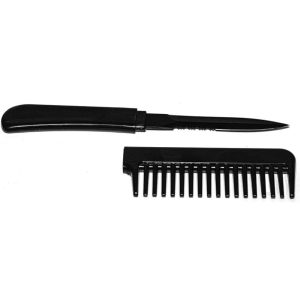
Comb Knife Disguised Metal Blade – 3.5-Inch Half-Serrated Stainless Steel, ABS Plastic Handle, 6.5-Inch Overall Length, Concealed Blade Design, Available in Black and Pink, Lightweight 0.15 lbs
$7.95 Select options This product has multiple variants. The options may be chosen on the product page -
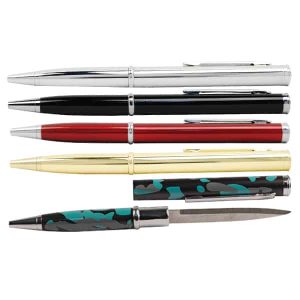
Pen Knife with Concealed 2.13-Inch Blade – Functional Ink Pen with Hidden Stainless Steel Blade, Twist-Apart Design, 5.38-Inch Overall Length, Pen Cap Safety, Available in Black, Silver, Gold, Red, Camo
$6.00 Select options This product has multiple variants. The options may be chosen on the product page -
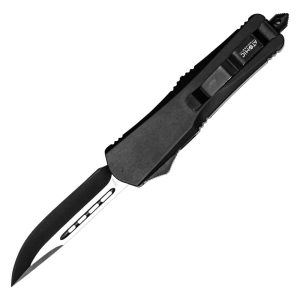
Safety Technology OTF Automatic Knife ST-AK-104 – Single Edge 3.5-Inch Blade, Out The Front Deployment, Premium Steel, Belt Clip, Glass Breaker Tip, 9-Inch Overall, 5.5-Inch Collapsed, Black
$69.95 Add to cart -
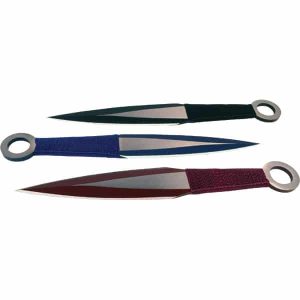
BioHazard 3-Piece Throwing Knife Set Assorted Colors Black Blue Red – 6.5-Inch 440 Stainless Steel Blades, Nylon Sheath Included, Beginner to Intermediate Practice
$15.95 Add to cart
Reviews
There are no reviews yet.